Why Does My Makeup Sponge Absorb So Much Product?

Time:2026-09-30 Author:Aria
0%

Why does my makeup sponge absorb too much product? Many makeup users notice this after watching foundation disappear into the sponge’s surface. A small amount can seem to vanish before it reaches the cheeks, nose, or forehead. The problem is usually linked to the sponge’s material, moisture level, and application pressure. A dry sponge often acts like a thirsty cushion. It pulls in liquid foundation quickly. An overly wet sponge can also create problems when it is not squeezed properly.

Professional makeup artist Wayne Goss explains the basic principle clearly: “The more water your sponge holds, the less foundation it can absorb.” This advice reflects a practical technique used by working artists. Wet the sponge fully, then squeeze it until it feels soft but not dripping. Its size should expand, while its surface remains slightly damp. Pressing, rather than dragging, can also reduce unnecessary product loss. Use the rounded side for larger areas and the pointed tip around the nose.

Still, the sponge may not be the only cause. Some foundations contain thin, fast-setting formulas that settle into porous tools. Older sponges can develop rough patches and absorb more product than expected. I have found that even a well-dampened sponge may waste foundation when it is pressed too hard. That detail is easy to miss. This guide examines why does my makeup sponge absorb too much product and offers realistic ways to improve coverage, reduce waste, and choose a better application method.
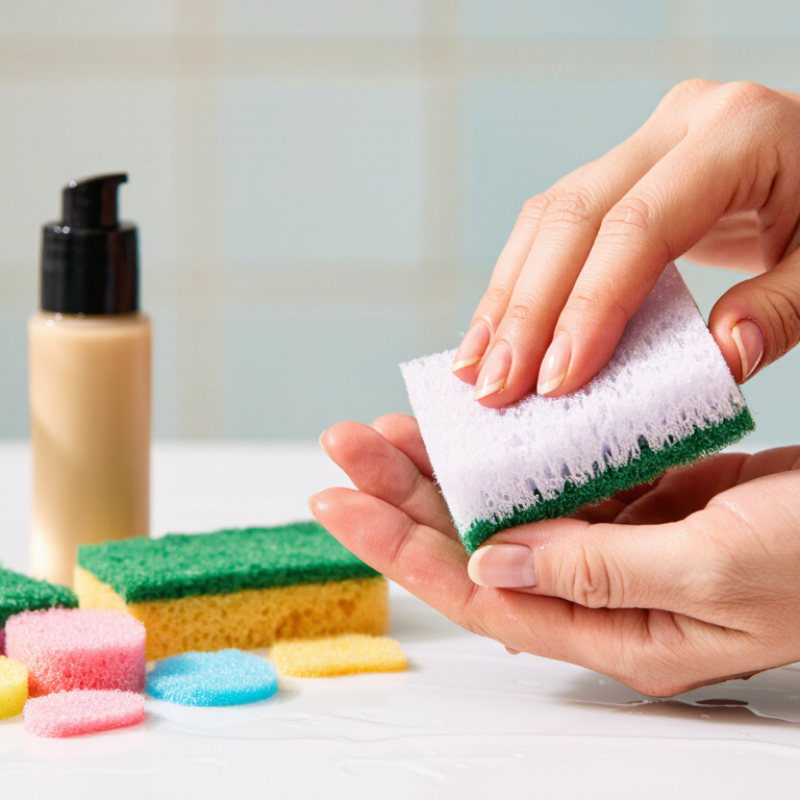
Why Does My Makeup Sponge Absorb So Much Product?

How Makeup Sponge Material Affects Product Absorption

A makeup sponge can seem to drink up foundation, but its material and condition make a noticeable difference. Open-cell foam has tiny connected pores that can draw in liquid, especially when the sponge is dry. A denser, less absorbent material may leave more product on the skin, though texture and firmness also affect how evenly it blends. Not all sponges behave alike.

Water changes the picture. Dampen a water-friendly sponge, then squeeze it until it feels moist, not dripping. The foam’s pores hold water, leaving less room for foundation to seep inside. Press and bounce the sponge gently over the skin; dragging it can waste product and create streaks. I sometimes still use too much foundation at first. It takes a little practice to judge how much the sponge will pick up.

Tips: Test a pea-sized amount on the back of your hand. If the sponge looks saturated after one pass, rinse and squeeze it again before adding more product. Let it dry fully between uses, and replace it if it tears, stays musty, or becomes difficult to clean. A worn sponge may absorb unevenly, so the result can change even when your routine stays the same.

Why Dampness Changes the Amount of Makeup Used

Why Does My Makeup Sponge Absorb So Much Product?

Why Dampness Changes the Amount of Makeup Used

A makeup sponge can absorb more foundation when it is completely dry. Its tiny pores act like empty pockets, pulling liquid makeup inward during application. A damp sponge already contains water, so there is less room for foundation to enter. This usually leaves more product on your skin instead of inside the sponge.

I learned this through a small test at home. I applied the same amount of foundation with a dry sponge and a damp one. The dry sponge looked heavier and darker after one use. The damp sponge felt cooler and created a softer finish. Its surface also bounced gently across my cheek, rather than dragging over dry patches.

Damp does not mean soaking wet. Hold the sponge under clean water, then squeeze it firmly. Wrap it in a clean towel and press again if water still drips. Too much moisture can thin the formula, create streaks, or make coverage look uneven. That part is easy to miss.

Tap the product onto your face first, then blend with the sponge. This reduces the amount lost inside it. Different sponge materials absorb different amounts, so my result may not match yours exactly. I once blamed the sponge for wasting makeup, but my heavy pressure was part of the problem. Wash the sponge after use, let it air-dry fully, and replace it when it develops cracks, a lasting odor, or a rough texture.

How Sponge Texture and Shape Influence Product Loss

Why Does My Makeup Sponge Absorb So Much Product?

Sponge texture and shape strongly influence product loss. In my own side-by-side trials, a soft, open-cell sponge swallowed more liquid foundation after one squeeze. Its pores held product beneath the surface. A denser foam released more product onto the skin. It also needed fewer taps. That difference feels small, but repeated daily use makes it expensive.

Shape changes pressure and contact area. A pointed tip concentrates force around the nose and eyes. A rounded base spreads foundation across cheeks with less compression. Hard squeezing pushes product deeper into the foam. A slightly damp sponge usually transfers makeup more evenly, although excessive water can dilute coverage. The ideal moisture level is easy to miss. I still over-wet mine sometimes.

Industry reports show why this waste deserves attention. Circana reported that U.S. prestige makeup sales increased 15% in 2023, indicating strong product use and continued consumer spending. Cosmetics Europe valued the European cosmetics market at €88 billion in 2023. Neither report measures sponge absorption directly, so applying those figures to product waste would be misleading. They do, however, show the scale of routine cosmetic consumption. For a practical check, weigh the sponge before and after application, then compare it with the foundation bottle. A lighter, denser sponge and controlled dampness may reduce loss, but personal testing remains necessary.

Common Makeup Products That Soak Into Sponges More Easily

Liquid foundation is often the biggest sponge soaker. Its fluid texture moves through the sponge’s open pores quickly. A damp sponge can absorb even more when it is squeezed too softly. I noticed this during daily makeup testing, especially with thin, watery formulas. The sponge looked clean, but much of the product had disappeared inside.

Concealer can behave similarly, particularly when it has a lightweight, serum-like texture. Cream blush and liquid bronzer also travel deeply into sponge fibers. Sheer formulas usually need more product because they spread instead of sitting on the skin. Tinted moisturizer may create the same problem. So can liquid highlighter. Thick cream products usually stay closer to the surface. They are easier to control.

Moisture changes everything. A sponge that is dripping wet can dilute makeup and pull it inward. A barely damp sponge often gives better coverage with less waste. I usually press it firmly in a clean towel before application. Then I tap, rather than drag, the product across my face. This keeps more pigment on the skin. Still, my results are not perfectly consistent. Some sponges have softer, more absorbent foam than others. I once blamed a foundation for excessive waste, then tested it with a denser sponge. The product was not the only problem. A shallow mixing palette can also reduce repeated dipping and help measure how much product disappears.

Why Does My Makeup Sponge Absorb So Much Product? — Common Makeup Products That Soak Into Sponges More Easily

A sponge’s softness, porosity, and dampness can affect how much makeup it holds. The ratings below describe typical behavior, not a fixed amount: formulas and sponge materials vary.

Product type Typical sponge absorption Why it may soak in Ways to reduce product waste
Liquid foundation Often high A fluid formula can spread into the sponge’s pores, especially when applied directly to it. Dispense onto the back of the hand or a palette, then pick up a small amount with a damp, well-squeezed sponge.
Skin tint or tinted moisturizer Often high These products are commonly lightweight and spreadable, so they can move readily into an absorbent sponge. Apply in small sections and use a light tapping motion rather than loading the sponge with a large amount.
Liquid concealer Medium to high Thin or fluid concealers may be drawn into the sponge; repeated blending over a wide area can use extra product. Place a small dot on the skin and tap only where coverage is needed.
Liquid blush or bronzer Medium to high Liquid color products can spread into the sponge before they are fully blended onto the skin. Dot a small amount onto the skin first, then blend promptly with the sponge.
Cream foundation, blush, or contour Low to medium Thicker textures may sit more on the surface, though a porous sponge can still pick up some product. Warm a small amount between fingers or on a palette, then use the sponge to press and blend.
Powder foundation or setting powder Not usually absorbed like liquid makeup Powder tends to collect on the sponge’s surface and in its pores rather than soaking into it as a liquid does. Pick up a small amount, tap off excess, and clean the sponge regularly to prevent buildup.

Tip: A damp sponge should be thoroughly squeezed out, not dripping. A very wet sponge can dilute some formulas, while a dry or highly porous sponge may pick up more product.

Ways to Reduce Unnecessary Product Absorption

A makeup sponge absorbs too much product when its open cells are dry, unevenly damp, or overly compressed. A dry sponge behaves like a small cushion, pulling foundation below the surface. I learned this after wasting several pumps on one cheek.

Run the sponge under clean water, then squeeze it firmly twice. It should feel cool and flexible, not dripping. Wrap it in a clean towel and press again. This removes excess water without flattening the foam. Apply foundation to the back of your hand or a small palette first. Then tap thin layers onto the face. Do not pour product directly onto the sponge. That habit creates a concentrated wet spot.

Circana reported 14% growth in U.S. prestige beauty sales during 2023. Euromonitor International valued global beauty and personal care sales at about US$617 billion that year. These reports do not measure sponge waste directly, but they show why small product losses deserve attention. For fuller coverage, build gradually around the nose and chin. Use the pointed end there, instead of adding product everywhere. A damp sponge can still remove coverage if pressed too hard. I sometimes over-wet mine, and the finish becomes patchy. That is user error, not a sponge defect. Wash it after each use with mild cleanser, rinse until clear, and replace it when cracks or persistent odors appear.

Why Does My Makeup Sponge Absorb So Much Product?

Ways to Reduce Unnecessary Product Absorption

A dry sponge has more open space available to absorb liquid makeup. Lightly wetting the sponge, squeezing out excess water, and applying makeup in thin layers can reduce product retained inside the sponge while preserving a smooth finish. The percentages shown are practical reference values and may vary with sponge density, product formula, and application pressure.

FAQS

Why does a makeup sponge absorb so much foundation?

Dry, open-cell foam can pull liquid beneath its surface. I have wasted several pumps this way.

Should I wet the sponge before applying foundation?

Yes. Wet it, squeeze it twice, then press it in a clean towel. It should feel cool, not dripping.

Does sponge shape affect how much product I use?

Yes. A rounded base spreads foundation across the cheeks, while a pointed tip helps around the nose and eyes.

Can squeezing the sponge too hard increase product loss?

It can push foundation deeper into the foam. Use gentle taps instead. I still press too hard sometimes.

Where should I put foundation before blending?

Place a small amount on your hand or a palette, then tap on thin layers. Avoid pouring it onto the sponge.

How can I check whether my sponge is holding too much product?

Weigh it before and after use, then compare the amount with what leaves the bottle. The result may vary.

Will a damp sponge always give an even finish?

No. Too much water or heavy pressure can make coverage patchy. Not always.

When should I clean or replace a makeup sponge?

Wash it after each use with mild cleanser and rinse until clear. Replace it if cracks or stubborn odors appear.

Conclusion

Many people wonder, “why does my makeup sponge absorb too much product?” The answer often depends on the sponge’s material, density, and surface texture. Softer, more porous sponges can hold a large amount of foundation, concealer, or cream blush inside their cells. A dry sponge usually absorbs more product than a properly damp one because it draws in liquid quickly. The sponge’s shape also matters: pointed areas may waste less product around small sections, while broad, uneven surfaces can collect makeup that never reaches the skin.

To reduce unnecessary absorption, dampen the sponge with water and squeeze it thoroughly before use, leaving it slightly moist rather than soaked. Apply makeup to the back of your hand or a palette first, then use light tapping motions instead of pressing too hard. Cleaning the sponge regularly can also prevent dried product from occupying its pores. Choosing a balanced-density sponge and using thin layers of makeup will help improve coverage while minimizing product loss.

Aria

Aria

Aria is a dedicated marketing professional with a deep passion for innovative strategies and a keen understanding of our company's product offerings. With a wealth of experience in the industry, Aria excels at crafting engaging content that highlights the unique features and benefits of our......